

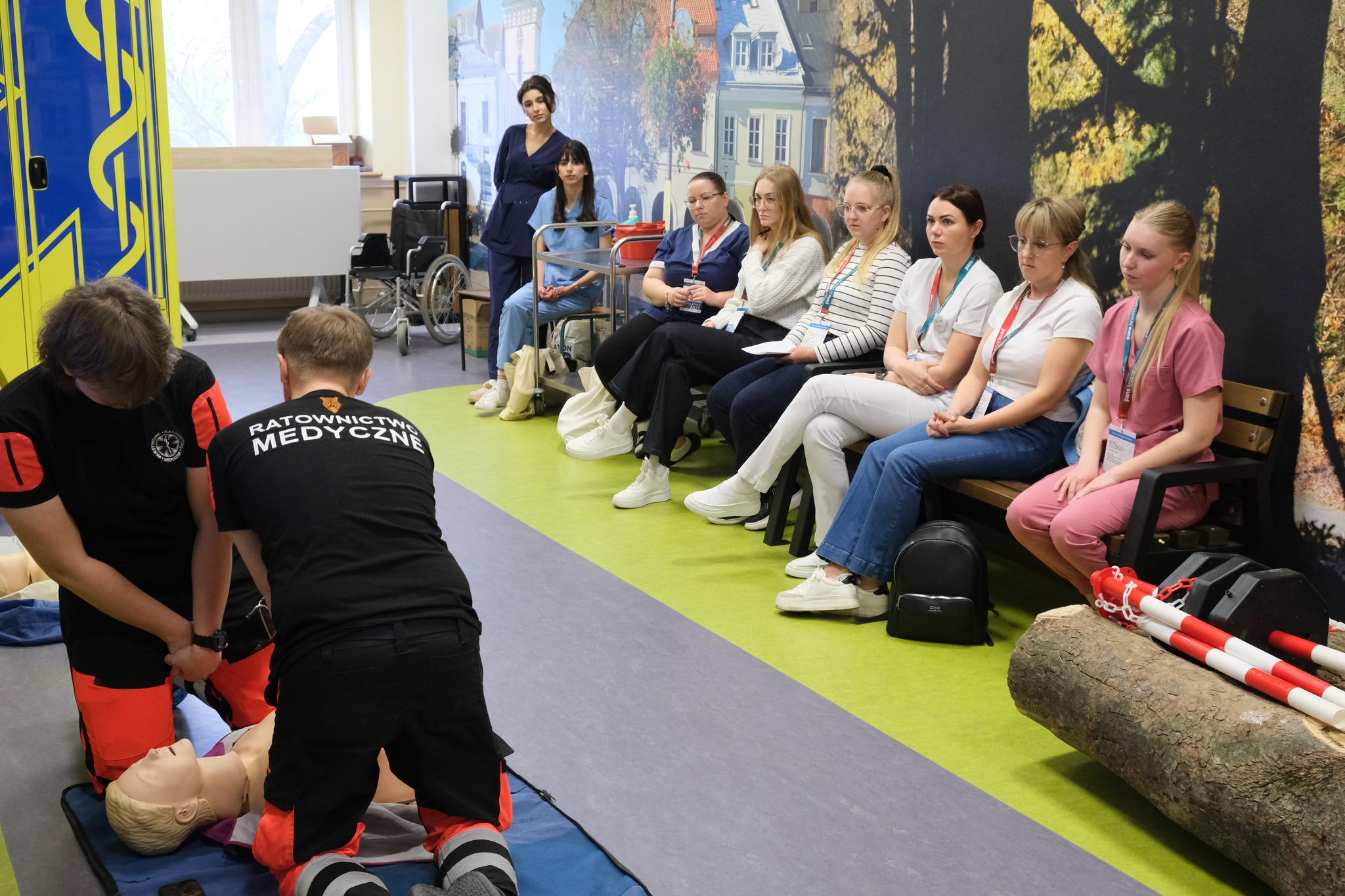
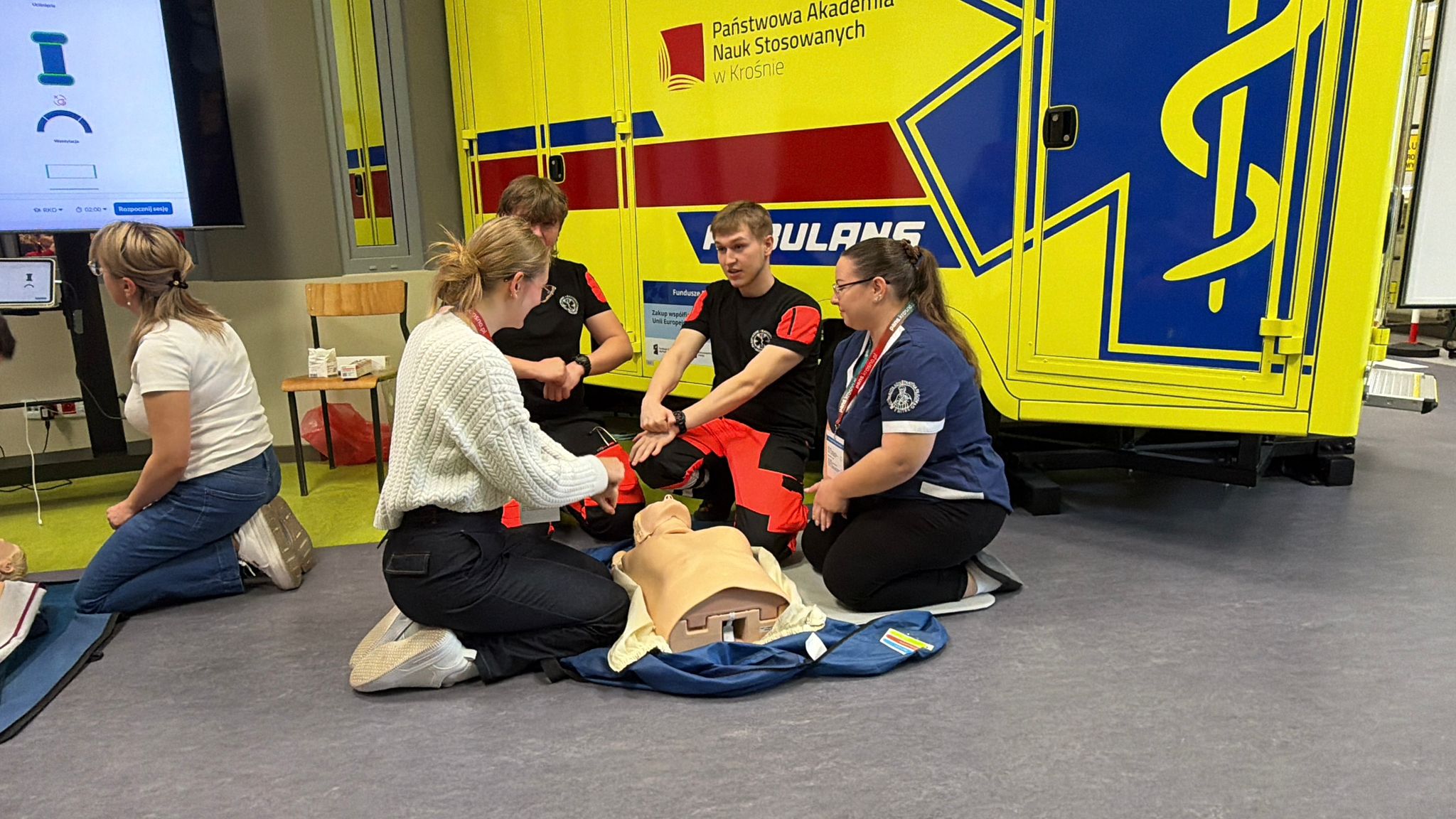
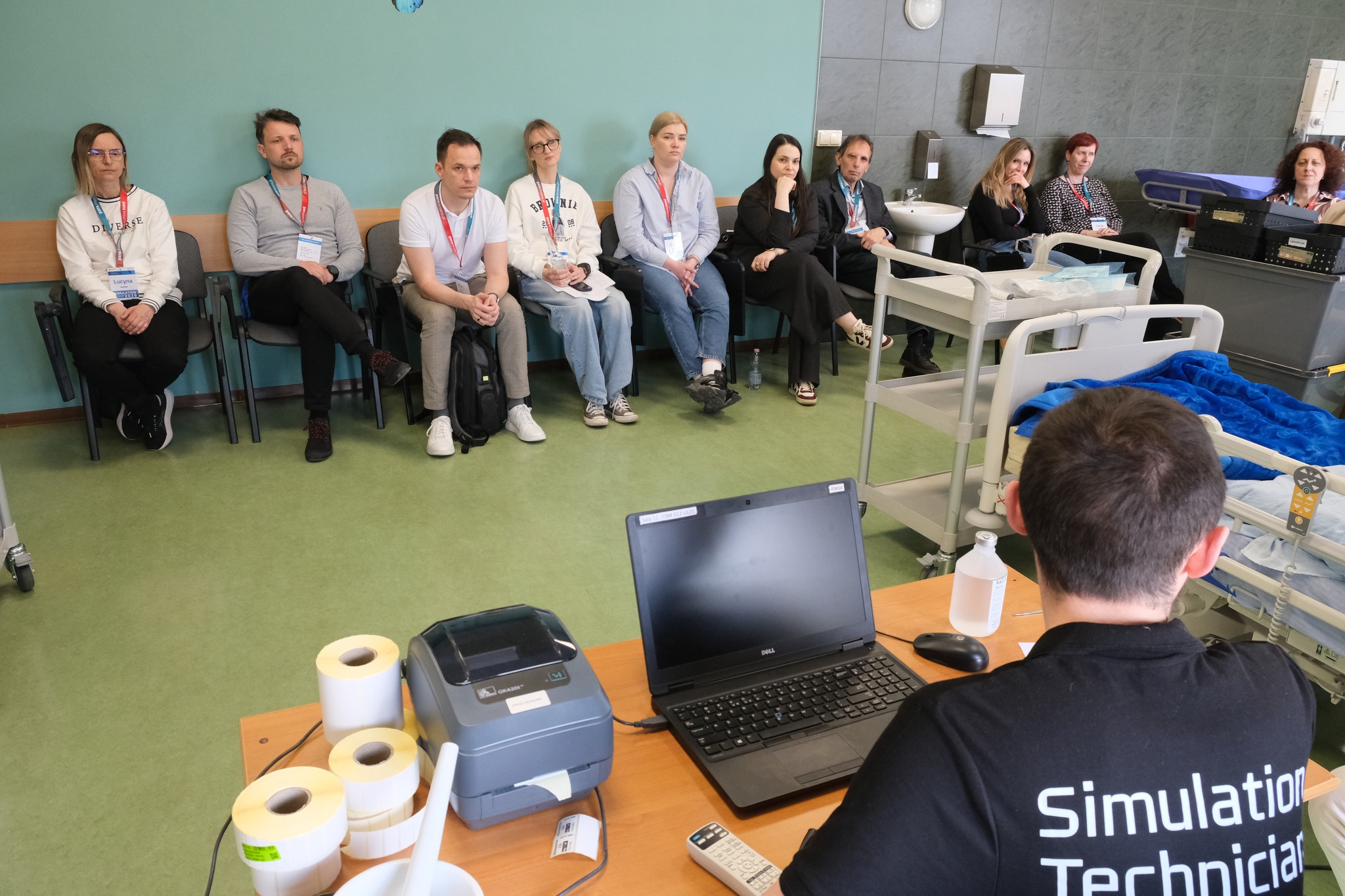
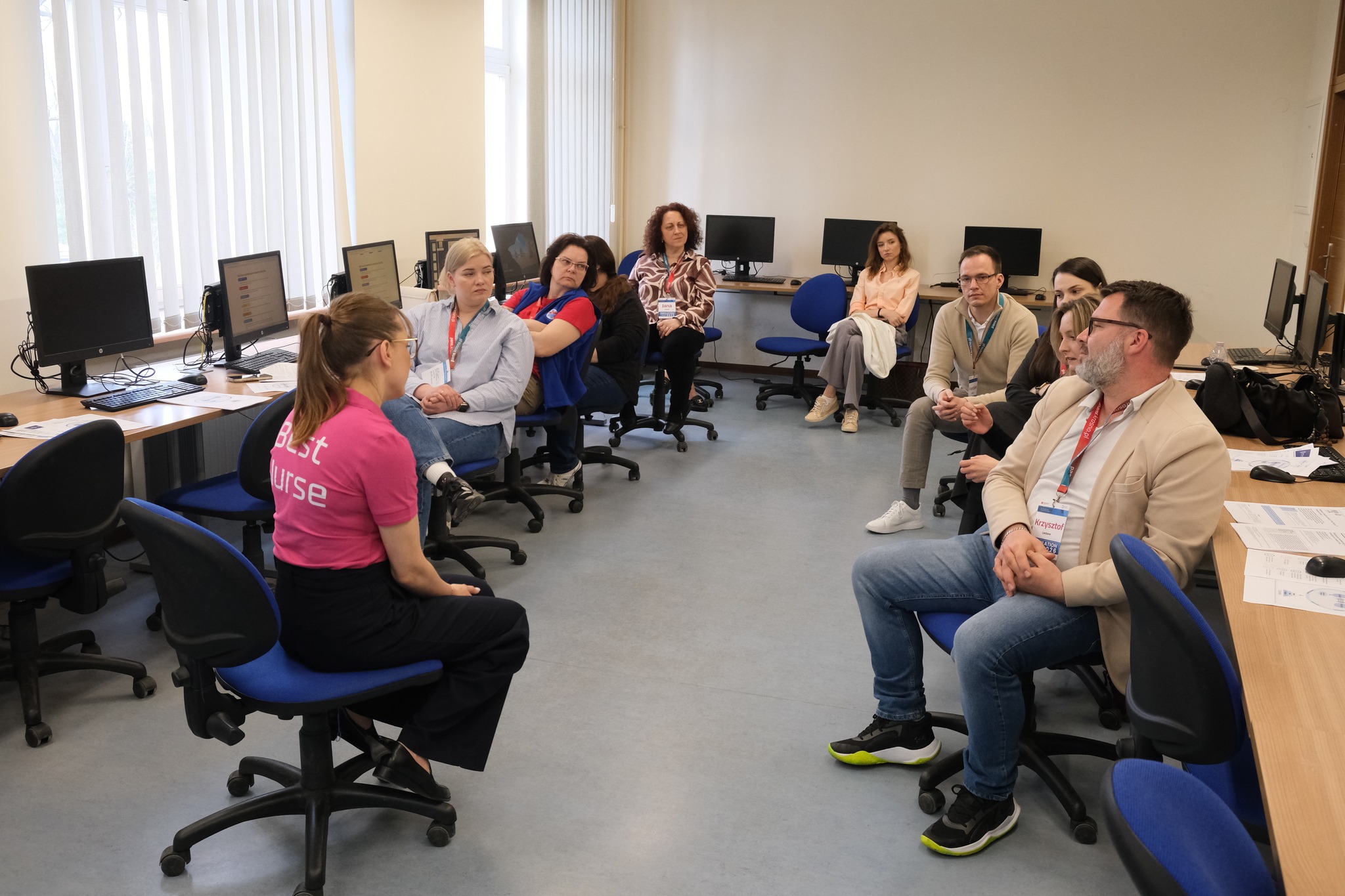
From 20 to 24 April, the international Simulation Trip 2026 took place in the Polish cities of Rzeszów, Krosno and Sanok, bringing together universities and experts in simulation-based education from Poland, Lithuania, the Slovak Republic and the Czech Republic. The aim of this mobility was to share experience in simulation-based learning, modern teaching methods, and the development of practical skills among students of non-medical healthcare programmes.
The programme focused on the exchange of good practice, visits to simulation centres, expert discussions on innovative teaching approaches, and the strengthening of international cooperation among the participating institutions. An important component was also the active involvement of students, who had the opportunity to compare educational approaches abroad, develop their professional competencies, and gain valuable experience in an international environment.
Representing the Faculty of Health and Social Sciences of the University of South Bohemia were lecturers Mgr. František Dolák, Ph.D., MBA and Mgr. Petr Kadeřábek. The student delegation included Petra Černá, Adéla Adamcová and Gréta Bednárová.
“Simulation-based education is now one of the key pillars of modern training for healthcare professionals. The opportunity to connect students and teachers from different countries clearly shows that we can learn a great deal from one another. Such meetings are important not only for professional development, but also for building international cooperation and sharing experience, which we can subsequently integrate into our own teaching at the faculty,” summarised Mgr. František Dolák, Ph.D., MBA, Vice-Dean for International Relations and Deputy Head of the Institute of Nursing, Midwifery and Emergency Care at the FHSS USB.
The event confirmed the importance of simulation-based education as a key tool for the safe preparation of future healthcare professionals. At the same time, it strengthened international relations and opened up further opportunities for cooperation in education, research, and the sharing of professional expertise among partner universities.


